
There is seldom a parent who hasn’t gone through the tantrum-throwing phase of their kids’ lives. You walk into a store, the kid sees a toy and she must have it. You say no and the next thing you see her rolling on the floor.
I went through that phase as well.
About when my daughter was four years old, I learned a neat little trick from a book called The First National Bank of Dad written by David Owen. That trick helped put an end to all her tantrums. The gist of it was letting kids control their own spending.
And it starts with giving them an allowance. Sizing the amount of allowance is subjective but at age four, I’d give $4 a week and raise it by a dollar on each birthday.
So if she wanted to buy a toy that cost $20, she’d have to wait five weeks to save up the cash to afford that toy.
There are two benefits:
- It teaches them delayed gratification. A seminal study and several follow on studies highlight that being able to delay gratification is a key ingredient for success in many aspects of life.
- Plus almost always, in a few weeks, she would change her mind about getting that toy or completely forget about it.
And a heartless dad that I was, I would hand out the allowance in small denominations and then have her store it in a transparent jar. So on occasions when she would follow through on a purchase, she’ll feel the weight of emptying a sizable chunk of her jar for what would ultimately amount to some plastic junk that I’ll be trashing anyways.
I would also have another jar that would serve as the dad’s bank where if she moved her savings into, I’d double the transferred amount on one condition: any cash that would move to this savings jar must remain invested for a minimum of 6 months.
Every Saturday would be pocket money day where she would receive her new allowance. That would also be a day where she would tally up all her savings. She would then display her hoard on a whiteboard and also track her account balance on a spreadsheet for some pretty plotting as she watched compound interest take hold.
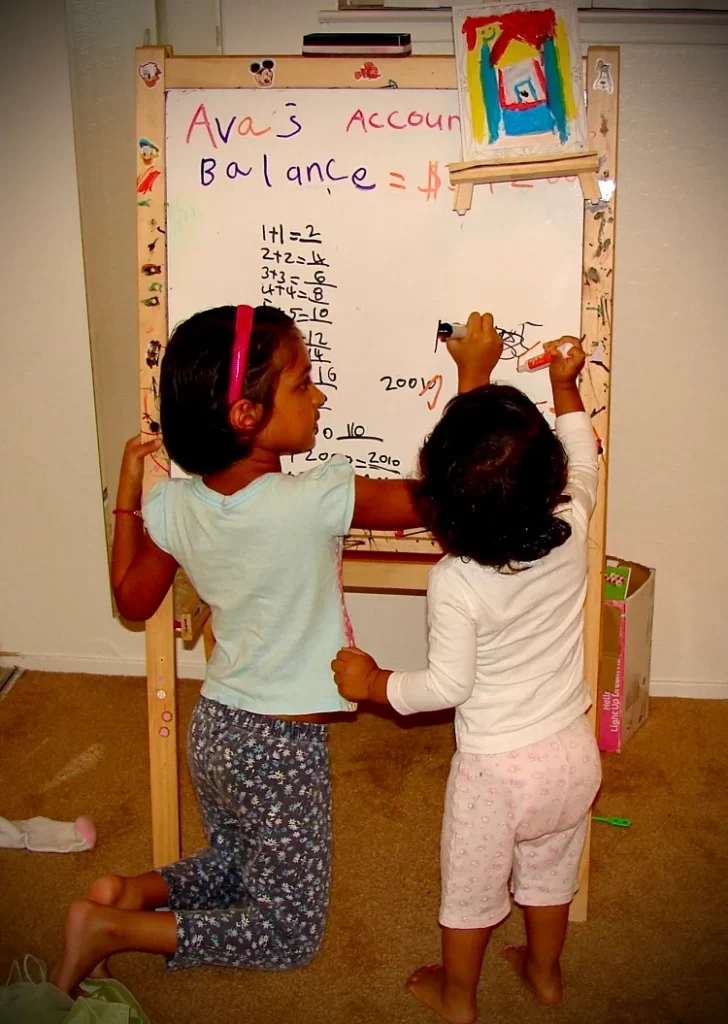
Granted, this is more work for busy parents but it is a great bonding exercise with all the pluses and literally no minuses.
Grocery shopping is another great place to teach them about making good consumer decisions. You talk about minimizing waste, you show them how to assess making trade-offs between buying product A vs. product B, you teach them to not be beholden to brands and you show them how to stretch a dollar far and wide.
And as they get older (teens), you discuss household finances and credit cards and interest rates and using debt responsibly. You involve them in big purchase decisions like buying a car and paying for college. You talk to them about time value of money and opportunity costs. You use every chance you get to discuss all these things before you send them out to face the mean bad world.
And kids do what you do. They don’t do what you say they should do. If your own house is in disarray, no amount of lecturing will fix their relationship with money. You might inadvertently make things worse as they get conflicted messaging.
My daughters are now old enough to tell me that they know everything and I don’t know nothing. But I know much of that experimentation worked. I see them make decisions that are qualifiedly fine. They have learned to be empathetic. They are good students. They work hard. They don’t get easily influenced. But regardless of all this, it is still a bunch of experimentation because every kid is different. Even the two sisters growing up in the same household are different.
Money is not everything but you get behaving with money right and life gets easy.
Thank you for your time.
Cover image credit – Cottonbro, Pexels