
It is hard to generalize investing but once you understand duration, you’ll know where to start. Duration is like maturity. If you were ever sold a bank CD, you know maturity. It is the amount of time it takes for that CD to mature.
But if you bought a bunch of equal dollar CDs with different maturity dates like six-months, one-year, two-years and five-years and combined them in a portfolio, you don’t have a single maturity date for that portfolio. You instead have a blended maturity date. That is duration.
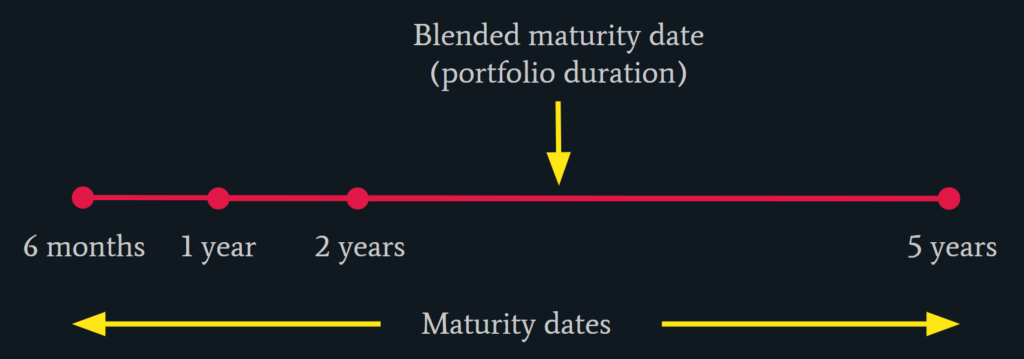
You use duration to structure your investments in a way to make sure you’ll have the money when you need it. It is about matching income to expenses while taking measured risks to continue affording a great quality of life. In finance lingo, this is called asset-liability matching.
Craig L. Israelsen who writes for the financial planning magazine likens building portfolios to making salsa. You start with tomatoes as the base ingredient. You then add onions, jalapenos, cilantro, garlic, and a bunch of other spices to make up that delicious salsa. You can customize the recipe to your own liking, but the fundamental building blocks required to make good salsa don’t change much. The same applies to building good reliable portfolios.
The base ingredients don’t change much. It is the usual mix of stocks and bonds and if you have been of an adventurous kind, some rental real estate to supplement the income a good portfolio delivers. The thing that changes are the proportions of each kind and within each kind, a spectrum of investment options with different maturity dates that you assemble in a portfolio with duration that aligns with your goals.
For example, the spectrum within bonds includes Treasury bonds issued by the U.S. government with maturity dates ranging from one month to 30 years. If you need the money in one month, you don’t want to buy 30-year bonds because even with the supposedly safest of all investments, you can lose money if you don’t get the duration right. All it takes is a one percent rise in interest rates and 20% is gone from the bond’s value.
Silicon Valley Bank learned this the hard way. It was your go-to bank if you were anywhere close to the startup ecosystem. It then experienced one of the fastest recorded bank runs in history when depositors tried to withdraw a staggering 42 billion dollars in a single day.
Even the best of the best running a key bank at the heart of the nation’s innovation economy didn’t get duration right. They took customers’ short-term deposits and bought long duration bonds for their investment portfolio when interest rates were at historic lows. All it took was a small rise in rates and the value of their bond portfolio declined by more than their deposit base. And poof went that bank.
We won’t make that mistake. We cannot afford to.
So back to bonds, we talked about Treasury bonds. Then there are corporate bonds that have similar maturity ranges but now since these are issued by businesses and businesses can go out of business, they come in with an extra layer of default risk that you want compensation for. Corporate bonds hence pay more interest than the same maturity Treasury bonds.
At the other end of the portfolio spectrum are stocks. Stocks in theory have no defined maturity dates but a blended portfolio of different kinds of stocks can be assumed to have a maturity date of around 20 years.
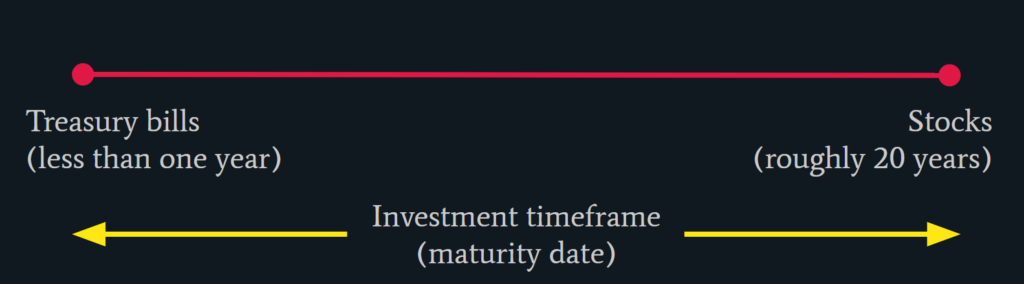
So this is your range. You don’t want to have all your money in stocks if you are saving for a house downpayment in three years. And you don’t want to have all your money in bonds if you are saving for retirement 30 years out.
You use your investment timeframe as a guidepost to decide how much of each you want to own. That investment timeframe becomes your portfolio’s duration. You blend in different investments to get the duration right whether it be for buying a home, saving for college or planning for retirement.
Thank you for your time.
Cover image credit – Ron Lach, Pexels